I think these videos are very good and worth watching.
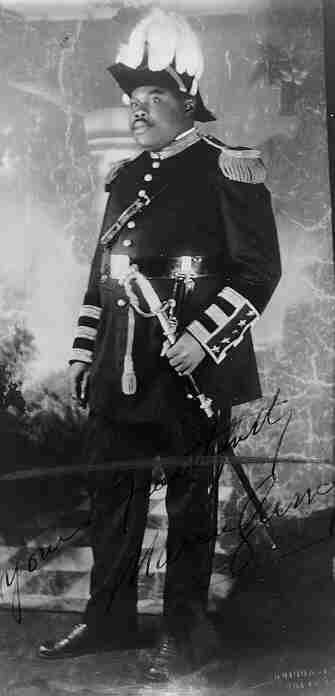
The Influence Of Marcus Garvey
Part 1
Part 2
—-
Some folks writing on Garvey
Garvey’s impact on his own was without parallel. Approximately twelve hundred branches of the UNIA in over forty countries speak for itself. His impact on succeeding generations has also been immense, in spite of a concerted mainstream effort first to expunge him from the pages of history and secondly, when the effort failed, to distort his record. Many African leaders in succeeding decades have expressly acknowledged their debt to Garvey’s influence. They include Kwame Nkrumah of Ghana, Nnamdi Azikewe of Nigeria and Jomo Kenyatta of Kenya. Modified versions of Garvey’s red, black and green flag can be seen in the national flag of Kenya and the flag of the African National Congress in South Africa. The strong influence of Garveyism on the ANC of the 1920’s and ’30s continued in the ANC Youth League of the 1940s and resides today in the Pan-Africanist Congress of Azania.
Garvey’s influence in Afro-America can be traced through a variety of major organizations and leaders. Elijah Muhammad was a member of the UNIA in Detroit and his Nation of Islam bore many obvious similarities to Garvey’s organization. The parents of Malcolm X were both local UNIA leaders in Omaha, Milwaukee and Lansing Michigan. Garvey himself visited the home of Malcolm’s parents on more than one occasion. Carlos Cooks of the African Nationalist Pioneer Movement, former Congresswoman Shirley Chisholm and ex-congressman Charles Diggs are among the post-Garvey leaders who emerged out of a Garvey background. The entire Black Power Movement of the 1960’s and 70’s was permeated with Garveyite symbols and ideas.
The Black Arts Movement was a counterpart of Garvey’s literary and cultural program which spearheaded the Harlem Renaissance. In the Caribbean practically the entire group of labor/political leaders who emerged circa the 1930’s were influenced in one way or another by Garveyism. They included Clement Payne of Barbados and Trinidad, St. William Grant of Jamaica, D. Hamilton Jackson of St. Croix and others.
Garvey’s influence can be traced also in non-African figures, particularly Ho Chi Minh of Viet Nam, an ardent support of UNIA during his New York sojourn in his younger days.
—-
In a message dated October 28, 1925, Garvey introduced a speaker from the Anglo-Saxon Clubs of America (the northern KKK counterpart), whom he had invited to speak at Liberty Hall:
“Mr. Plowell and his organizations sympathize with us even as we sympathize with them. I feel and believe that we should work together for the purpose of bringing about the ideal sought-the purification of the races, their autonomous separation and the unbridled freedom of self-development and self-expression.”